

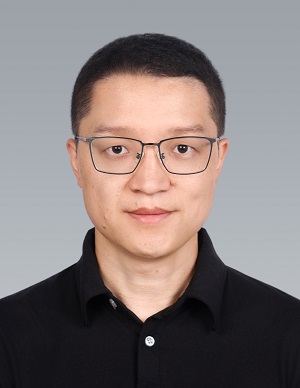
Huigang Shi, Ph.D, Prof.
-
Principal Investigator
State Key Laboratory of Biomacromolecules, IBP
Research Interests: Structure-guided molecular glue design and protein degradation
Email: huigangshi@ibp.ac.cn
Tel:
Address: 15 Datun Road, Chaoyang District, Beijing, 100101, China
Chinese personal homepage
- Biography
2008.09 - 2012.07 Shandong Normal University, B.S. in Biotechnology
2012.09 - 2015.07 Fudan University, M.S. in Biochemistry and Molecular Biology
2015.09 - 2019.07 Institute of Biophysics, Chinese Academy of Sciences, Ph.D. in Biophysics
2019.08 - 2020.12 Institute of Biophysics, Chinese Academy of Sciences, Postdoctoral Researcher
2021.02 - 2026.07 University of Washington/Howard Hughes Medical Institute, Postdoctoral Researcher
2026.08 - Present Institute of Biophysics, Chinese Academy of Sciences, Principal Investigator
- Awards
- Membership in Academies & Societies
- Research Interests
Our research focuses on the molecular mechanisms governing protein fate and their precise chemical modulation. Protein fate encompasses protein synthesis, processing and maturation, post-translational modification, complex assembly, and degradation. Central to these processes is molecular recognition: how enzymes precisely distinguish specific substrates and how such recognition can be selectively modulated by small molecules. Understanding these principles is fundamental to elucidating protein homeostasis and its dysregulation in disease.
We have long been interested in substrate recognition and regulation in protein degradation pathways. Our work revealed how protein assembly states encode quaternary structure degrons that are selectively recognized by distinct ubiquitin ligases. We further established the concept of orthosteric molecular glue inhibitors (OMG inhibitors) and demonstrated how conventional active-site inhibition can be transformed into substrate-dependent inhibition.
Building on these discoveries, our laboratory aims to establish new principles and approaches for substrate selective enzyme modulation. By exploiting molecular interfaces between enzymes and their substrates, we seek to selectively control disease relevant protein processing and degradation while preserving physiological enzyme functions. We are particularly interested in protein fate regulatory mechanisms underlying neurodegenerative and metabolic diseases, with the goal of developing substrate selective chemical strategies that overcome the on-target toxicity of conventional enzyme inhibitors and enable more precise therapeutic intervention.
- Grants
- Selected Publications
1. Shi H, et al. CSN5i-3 is an orthosteric molecular glue inhibitor of COP9 signalosome. Nature (2026), 1375-1383. (First author)
2. Cao S*, Garcia SF*, Shi H*. Recognition of BACH1 quaternary structure degrons by two F-box proteins under oxidative stress. Cell (2024). (*Co-first author)
3. Shi H*, Wu C*. Addressing compressive deformation of proteins embedded in crystalline ice. Structure (2023). (*Co-first author)
4. Wu C*, Shi H*, et al. Low-cooling-rate freezing for recovery of initial frames in cryo-EM. QRB Discovery (2021). (*Co-first author)
5. Bei W*, Luo Q*, Shi H*, et al. Cryo-EM structures of LolCDE reveal mechanism of lipoprotein sorting. PLOS Biology (2022). (*Co-first author)
6. Zhou C*, Shi H*, Zhang M*, et al. Structural insight into MlaFEBD phospholipid transport. JMB (2021). (*Co-first author)
7. Zhang M*, Shi H*, Zhang X*, et al. Cryo-EM structure of CsgG-CsgF complex reveals curli biogenesis control. PLOS Biology (2020). (*Co-first author)
8. Xu X*, Shi H*, et al. Structural insights into sodium transport by oxaloacetate decarboxylase. eLife (2020). (*Co-first author)
(From Huigang Shi, August 20, 2026)