

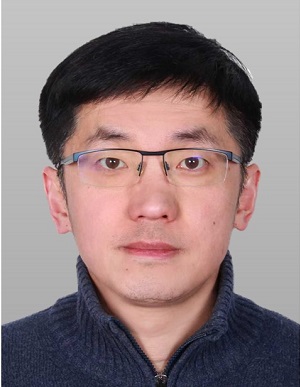
Jie Wang, Ph.D, Prof.
-
Principal Investigator
State Key Laboratory of Biomacromolecules, IBP
Research Interests: dynamic assembly, biomolecular condensates, weak, transient interactions, molecular grammar
Email: wangjie@ibp.ac.cn
Tel:
Address: 15 Datun Road, Chaoyang District, Beijing, 100101, China
Chinese personal homepage
- Biography
2005.09 - 2009.07 Sichuan University, B.S. (Biological Sciences)
2009.09 - 2015.01 Tsinghua University, Ph.D. (Biochemistry and Molecular Biology)
2015.05 - 2020.02 Max Planck Institute of Molecular Cell Biology and Genetics (MPI-CBG), Postdoctoral Researcher
2020.03 - 2021.12 Whitehead Institute, Postdoctoral Researcher
2022.01 - 2025.12 Max Planck Institute of Molecular Cell Biology and Genetics (MPI-CBG), Postdoctoral Researcher
2026.01 - Present Institute of Biophysics, Chinese Academy of Sciences, Principal Investigator
- Awards
- Membership in Academies & Societies
- Research Interests
In cells, many essential structures are not “built once and fixed.” Instead, proteins and nucleic acids continuously assemble and disassemble through numerous reversible, transient weak interactions. Liquid-like biomolecular condensates are a classic example: they often form rapidly via weak-interaction–driven phase separation and dissolve just as quickly when no longer needed. Because these interactions are weak, fast-changing, and highly state-dependent, many conventional approaches—well suited for stable structures—struggle to capture the key molecular mechanisms of such processes in their native cellular context.
We aim to understand how protein sequence and structure jointly encode dynamic assembly, what cellular tasks these assemblies enable, and under what conditions they become dysregulated—especially in cancer. We refer to the rule set by which amino acids specify weak interactions and thereby determine dynamic assembly behavior as molecular grammar. Like the genetic codon table, this grammar should be readable: given sequence and structural cues, we want to infer whether a protein can assemble dynamically, how long assemblies persist, and which partners it tends to co-assemble with.
To achieve this, we use high-throughput mutagenesis and quantitative microscopy as a discovery engine. Starting from individual proteins, we systematically perturb key positions and track the emergence and dissolution of assemblies to decode their molecular grammar. We then combine bioinformatics to generalize these principles across related proteins and extract reusable, predictive rules. Finally, we integrate protein biochemistry and cell-based assays to test how changes in assembly translate into specific cellular functions and disease-relevant phenotypes.
Scientific Questions
How do protein sequence and structure encode dynamic assembly (e.g., biomolecular condensates) to control functional outputs?
What essential cellular functions are enabled by dynamic assembly?
When dynamic assembly goes awry, how does it rewire cellular function and drive diseases such as cancer?
What is the “molecular grammar” underlying weak-interaction–driven dynamic assembly?
- Grants
- Selected Publications
1. Wang J*#, Zhao X#, Li L#, Stöter M, Pozniakovsky A, Nijssen J, Jülicher F, Zhang X*, Hyman AA*. Encoding Condensate Behavior in Globular Proteins via Flexible Surface Loops. Science. 2025. (*通讯作者;#共同第一作者;Under revision)
2. Wang J, Choi J-M, Holehouse AS, Lee HO, Zhang X, Jahnel M, Maharana S, Lemaitre R, Pozniakovsky A, Drechsel D, Poser I, Pappu RV, Alberti S, Hyman AA. A molecular grammar governing the driving forces for phase separation of prion-like RNA binding proteins. Cell. 2018; 174(3): 688–699.e16.
3. Wang J, Jiang J, Wang J, Chen L, Fan S-L, Wu J-W, Wang X, Wang Z-X. Structural insights into the negative regulation of BRI1 signaling by BRI1-interacting protein BKI1. Cell Research. 2014; 24: 1328–1341.
4. Wollny D, Vernot B, Wang J, Hondele M, Safrastyan A, Aron F, Micheel J, He Z, Hyman A, Weis K, Camp JG, Tang T-YD, Treutlein B. Characterization of RNA content in individual phase-separated coacervate microdroplets. Nature Communications. 2022; 13(1): 2626.
5. Boczek EE, Fürsch J, Niedermeier ML, Jawerth L, Jahnel M, Ruer-Gruß M, Kammer K-M, Heid P, Mediani L, Wang J, Yan X, Pozniakovski A, Poser I, Mateju D, Hubatsch L, Carra S, Alberti S, Hyman AA, Stengel F. HspB8 prevents aberrant phase transitions of FUS by chaperoning its folded RNA-binding domain. eLife. 2021; 10: e69377.
6. van Mierlo G, Jansen JRG, Wang J, Poser I, van Heeringen SJ, Vermeulen M. Predicting protein condensate formation using machine learning. Cell Reports. 2021; 34(5): 108705.
7. Jawerth L, Fischer-Friedrich E, Saha S, Wang J, Franzmann T, Zhang X, Sachweh J, Ruer M, Ijavi M, Saha S, Mahamid J, Hyman AA, Jülicher F. Protein condensates as aging Maxwell fluids. Science. 2020; 370(6522): 1317–1323.
8. Maharana S, Wang J, Papadopoulos DK, Richter D, Pozniakovsky A, Poser I, Bickle M, Rizk S, Guillén-Boixet J, Franzmann T, Jahnel M, Marrone L, Chang Y-T, Sterneckert J, Tomancak P, Hyman AA, Alberti S. RNA buffers the phase separation behavior of prion-like RNA binding proteins. Science. 2018; 360: 918–921.
9. Patel A, Malinovska L, Saha S, Wang J, Alberti S, Krishnan Y, Hyman AA. ATP as a biological hydrotrope. Science. 2017; 356(6339): 753–756.
10. Marrone L, Drexler HCA, Wang J, Tripathi P, Distler T, Heisterkamp P, Anderson EN, Kour S, Moraiti A, Maharana S, Bhatnagar R, Belgard TG, Tripathy V, Kalmbach N, Hosseinzadeh Z, Crippa V, Abo-Rady M, Wegner F, Poletti A, Troost D, Aronica E, Busskamp V, Weis J, Pandey UB, Hyman AA, Alberti S, Goswami A, Sterneckert J. FUS pathology in ALS is linked to alterations in multiple ALS-associated proteins and rescued by drugs stimulating autophagy. Acta Neuropathologica. 2019. doi:10.1007/s00401-019-01998-x.
11. Feng B, Mandava CS, Guo Q, Wang J, Cao W, Li N, Zhang Y, Zhang Y, Wang ZX, Wu JW, Sanyal S, Lei J, Gao N. Structural and functional insights into the mode of action of a universally conserved Obg GTPase. PLoS Biology. 2014; 12(5): e1001866.
12. Guillén-Boixet J, Kopach A, Holehouse AS, Wittmann S, Jahnel M, Schlüßler R, Kim K, Trussina IREA, Wang J, Mateju D, Poser I, Maharana S, Ruer-Gruß M, Richter D, Zhang X, Chang Y-T, Guck J, Honigmann A, Mahamid J, Hyman AA, Pappu RV, Alberti S, Franzmann TM. RNA-induced conformational switching and clustering of G3BP drive stress granule assembly by condensation. Cell. 2020; 181: 346–361.e17.
13. Alberti S, Saha S, WoodruffJB, Franzmann TM, Wang J, Hyman AA. A User’s Guide for Phase Separation Assays with Purified Proteins. Journal of Molecular Biology. 2018; 430(23): 4806–4820.
14. Li SJ, Wang J, Ma L, Lu C, Wang J, Wu JW, Wang ZX. Cooperative autoinhibition and multi-level activation mechanisms of calcineurin. Cell Research. 2016; 26(3): 336.
15. Jiang J, Wang T, Wu Z, Wang J, Zhang C, Wang H, Wang ZX, Wang X. The intrinsically disordered protein BKI1 is essential for inhibiting BRI1 signaling in plants. Molecular Plant. 2015; 8(11): 1675–1678.
16. Li H, Wang J, Cao LS, Wang ZX, Wu JW. Structural mechanism of DNA recognition by the p202 HINa domain: insights into the inhibition of Aim2-mediated inflammatory signaling. Acta Crystallographica Section F. 2014; 70(1): 21–29.
(From Jie Wang, January 27, 2026)