

New Computational Tool "DomainSeeker" Solves Bottleneck in In Situ Structural Biology
Cryo-electron tomography (cryo-ET) has emerged as a powerful technique for visualizing molecular machinery inside cells, driving the field of "visual proteomics." However, sub-tomogram averaging of cryo-ET maps often struggles to reach the high resolution required for side-chain-based atomic modeling. While current strategies rely on fitting predicted candidate structures into these densities, the massive candidate libraries and the tendency of existing tools to retain only top-scoring fits frequently lead to misidentifications. Furthermore, complementary experimental constraints, such as cross-linking mass spectrometry (XL-MS), remain underutilized in these computational workflows. Accurately identifying proteins from these lower-resolution density maps based solely on structural fitting remains largely infeasible.
To overcome this, researchers from the Institute of Biophysics of the Chinese Academy of Sciences and the University of Science and Technology of China have developed a new computational framework, DomainSeeker, which achieves accurate de novo identification of protein domains in medium- and low-resolution electron density maps. DomainSeeker can also integrate XL-MS experimental data to further improve identification accuracy and result reliability.
The DomainSeeker workflow consists of four core modules: the domain parsing module, the domain fitting module, the prior probability calculation module, and the posterior probability calculation module. The team also developed an interactive ChimeraX plugin, allowing researchers to complete entire computation in a one-stop manner through a graphical interface, intuitively view density, fitted structures, and experimental evidence, and lowering the barrier to tool use.
The researchers systematically validated DomainSeeker's performance using two classic in situ cryo-ET datasets: the mouse sperm microtubule doublet and the yeast nuclear pore complex datasets.
DomainSeeker constructs a unified probabilistic computation framework that integrates AI-predicted structures and XL-MS experimental evidence. The output not only provides candidate rankings but also offers quantified probability confidence values, greatly improving the reliability of protein component identification for medium- and low-resolution in situ electron microscopy density maps.
The framework has good scalability and can in the future be connected to additional modalities of experimental data, such as immunoelectron microscopy, super-resolution fluorescence microscopy, and spatial mass spectrometry, further broadening its applications.
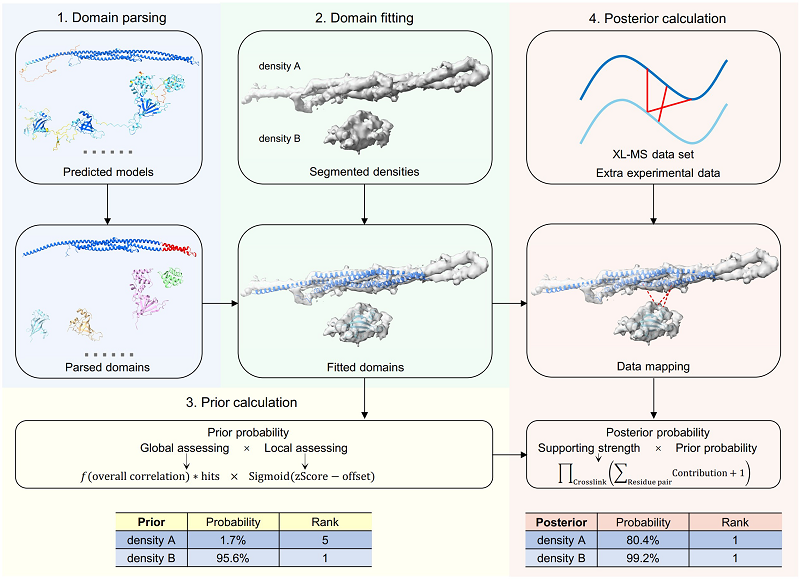
Figure 1. Workflow of DomainSeeker. It comprises four core modules: domain parsing, domain fitting, prior probability calculation, and posterior probability calculation.
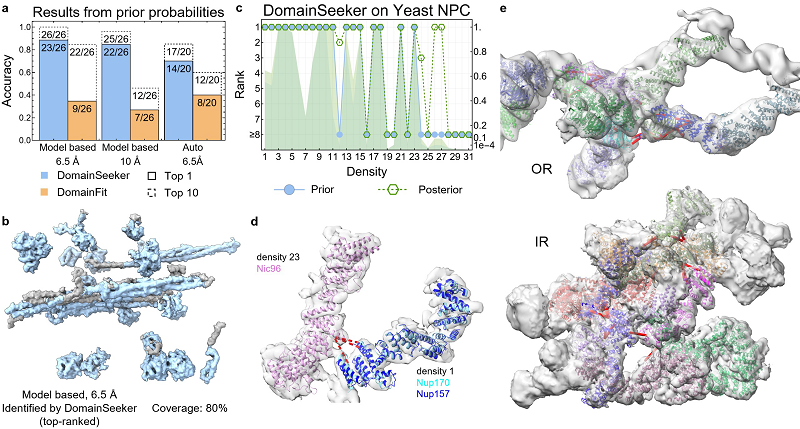
Figure 2. Identification results of DomainSeeker.
a. Identification accuracy of DomainSeeker and DomainFit at 6.5 Å and 10 Å resolutions and on automatically segmented densities. b. The coverage of regions identified by DomainSeeker is 80%. c. Rankings and probabilities under the prior probability (blue) and posterior probability (green). d. Discrimination between the structurally similar Nup170 and Nup157. e. A preliminary model of the yeast nuclear pore complex constructed, with red lines representing cross-linking mass spectrometry constraints.
(Image by SUN Fei's group)
Article link:
https://www.nature.com/articles/s41467-026-79502-9
Software link:
https://github.com/zyzhangGroup/DomainSeeker
Contact: SUN Fei
Institute of Biophysics, Chinese Academy of Sciences
Beijing 100101, China
E-mail: feisun@ibp.ac.cn
(Reported by Prof. SUN Fei's group)