

Professor Dinshaw J. Patel visited the Institute of Biophysics (IBP) and gave a Bei Shizhang Lecture
Professor Dinshaw J. Patel, a world-renowned structural biologist, member of both the U.S. National Academy of Sciences and the American Academy of Arts and Sciences, visited IBP and gave a Bei Shizhang Lecture entitled Antiphage defense by CARF-effector and protective deity systems on Mar 24, 2026. The lecture was hosted by Professor Yanli Wang.
Professor Patel is currently a Professor at the Memorial Sloan Kettering Cancer Center (MSKCC). He has long been dedicated to the study of protein and RNA recognition mechanisms in RNA silencing pathways and structural mechanisms of DNA methylation and histone modification. His career is marked by numerous milestone achievements. In recent years, Professor Patel has shifted his focus toward bacterial anti-phage defense systems, where he continues to secure groundbreaking advancements.
Notably, Professor Patel has been a staunch supporter of China's scientific development, actively promoting international exchange and talent cultivation in the life sciences. For his outstanding contributions, he was honored with the Tan Jiazhen International Life Science Collaboration Award in 2019 and the Bei Shizhang International Award in 2023.
In the first half of the lecture, Professor Patel focused on the role of bacterial CRISPR systems in anti-phage immunity. He provided a detailed explanation of the cyclic oligoadenylate (cOA)-mediated activation mechanism of CARF-effectors in Type III CRISPR systems. Through precise structural analysis, he elucidated how various effectors-including nucleases, transmembrane domains, deaminases, and NAD hydrolases-function. This work illustrates how bacteria use sophisticated chemical signals to precisely regulate the "switches" of their defense systems.
In the second half, he shared his team's latest discoveries regarding the Pucsar and Lamasu systems. He explained how phage invasion signals trigger the release of effector proteins from a "sequestered" state, leading to conformational changes, oligomerization, and filamentation-all necessary steps for the effectors to exert their defensive functions. Finally, he introduced the mechanism of the PUA-Cal-HAD defense system and clarified the vital role of m6-dAMP in phage-driven host chromosome degradation. These findings offer a new lens through which to view the co-evolution of hosts and viruses.
During the Q&A session, Professor Patel engaged in an in-depth dialogue with participants. Attendees noted that the presentation not only demonstrated the rigor and aesthetic beauty of structural biology but also provided a visionary look at the complexity of biological defense systems, sparking significant inspiration for future research and collaboration.
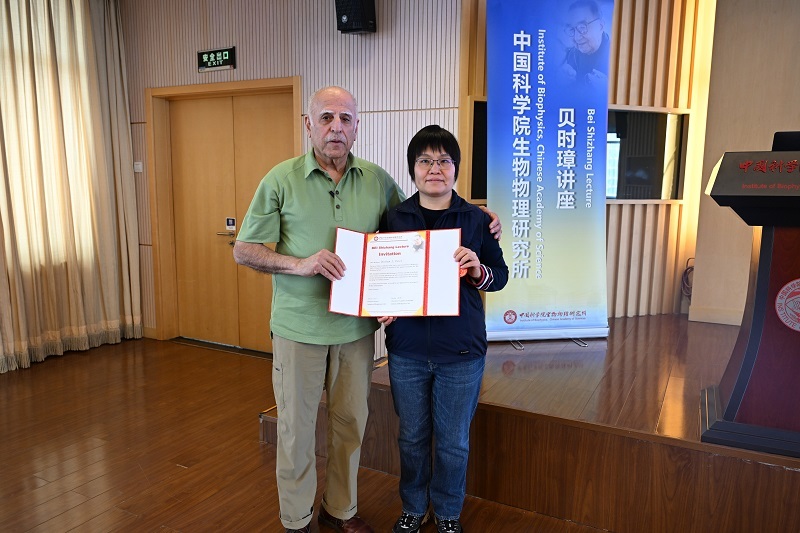
Prof. Dinshaw J. Patel and Prof. Yanli Wang
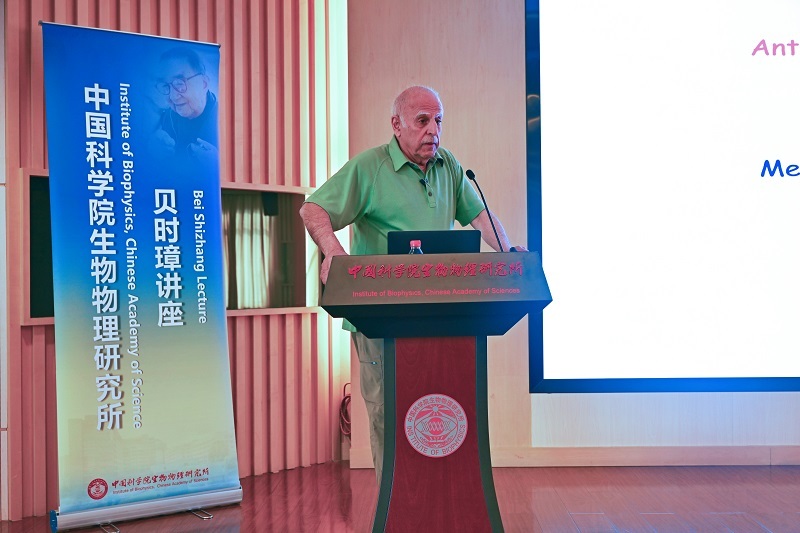
Professor Dinshaw J. Patel was giving the lecture
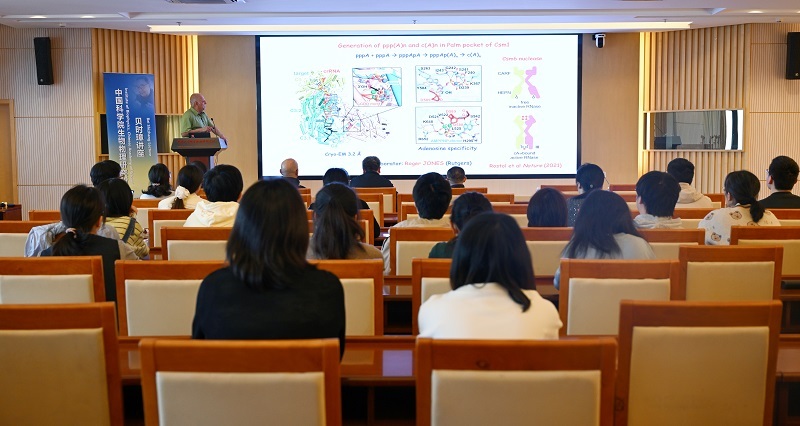
The audience