

Jason G. Cyster Visited the Institute of Biophysics (IBP) and gave a Bei Shizhang Lecture
Professor Jason G. Cyster, a world-renowned immunologist, member of both the National Academy of Sciences (NAS), and the American Academy of Arts and Sciences (AAAS), was invited to visit IBP as a guest speaker for the Bei Shizhang Lecture. He delivered an academic presentation titled Deciphering the Guidance Cue Code for Adaptive Immunity on July 3, 2026.The lecture was hosted by Investigator Baidong Hou.
Professor Cyster is currently a Professor in the Department of Microbiology and Immunology at the University of California, San Francisco (UCSF), and an Investigator of the Howard Hughes Medical Institute (HHMI). He has long been dedicated to elucidating the molecular mechanisms governing immune cell migration, positioning, and tissue residency. He is internationally recognized for uncovering the fundamental principles by which the lymphoid tissue microenvironment regulates adaptive immune responses. His research has profoundly advanced the fields of immune cell migration and tissue microenvironments, laying an important theoretical foundation for understanding the spatiotemporal regulation of immune responses.
In the first part of the lecture, Professor Cyster discussed how Gα13 signaling regulates germinal center (GC) B-cell positioning and humoral immune responses. He highlighted the critical role of Gα13 signaling in maintaining germinal center organization, promoting antibody diversity, and balancing antibody breadth with affinity. These findings provide important insights into the mechanisms governing B-cell clonal selection and adaptive immune responses.
In the second part, Professor Cyster focused on the role of Gα13 signaling in intestinal T-cell positioning, tissue homeostasis, and immune function. He presented recent findings demonstrating that Gα13 signaling is essential for the migration, tissue residency, and homeostasis of intestinal intraepithelial lymphocytes and discussed how disruption of this pathway compromises intestinal immune homeostasis and aggravates inflammatory disease. He also introduced the upstream regulatory mechanisms of the Gα13 pathway and their significance in maintaining the intestinal immune microenvironment, offering new perspectives on the regulation of tissue immunity.
The lecture concluded with a lively discussion session, during which Professor Cyster engaged with participants, answering questions and exchanging ideas on immune cell migration, tissue organization, and related research directions. The audience highly appreciated the insightful presentation, which highlighted recent advances in the field and inspired further discussion on the mechanisms underlying adaptive immunity and tissue immune homeostasis.
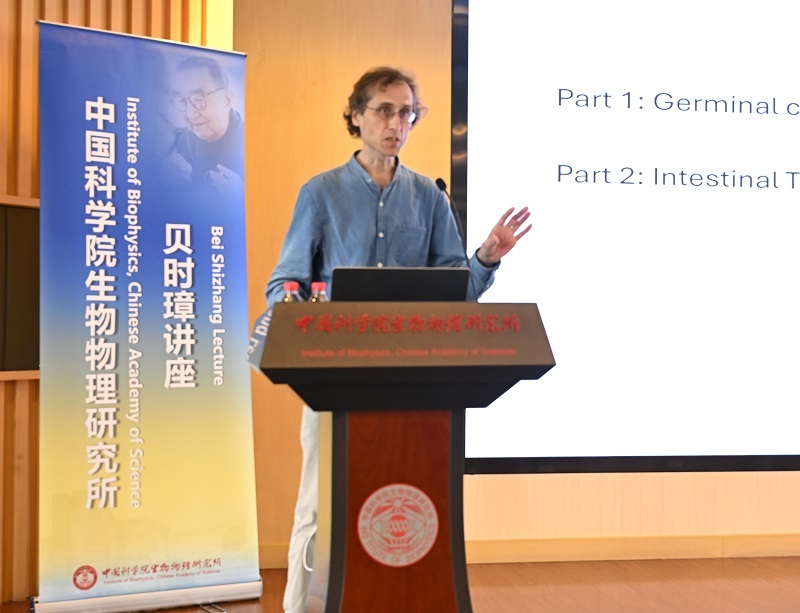
Professor Cyster was giving a lecture
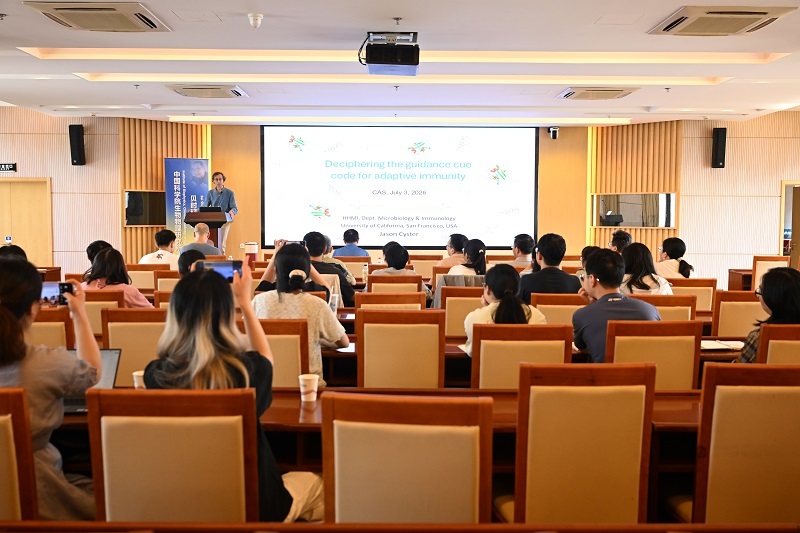
The audience