

Structural Mechanisms of Human G6PT1 in Glucose-6-Phosphate Transport and Inhibition
Human glucose-6-phosphate transporter 1 (G6PT1) is a central regulator of hepatic glucose production and a key player in both inherited metabolic disorders and diabetes therapy. However, the molecular mechanisms underlying substrate recognition, phosphate-coupled G6P transport, conformational dynamics, and specific inhibition by chlorogenic acid (CGA) have long remained elusive.
Using an integrated cryo-electron microscopy (cryo-EM) single-particle approach, a research group led by Prof. ZHAO Yan at the Institute of Biophysics of the Chinese Academy of Sciences, successfully determined high-resolution three-dimensional structures of full-length, wild-type human G6PT1 in multiple functional states.
These include the inward-facing apo conformation, the inward-facing conformation bound to the substrate G6P, the outward-facing conformation bound to the cosubstrate inorganic phosphate (Pi), and the inward-facing conformation bound to the natural inhibitor CGA. The series of structures forms a dynamic set of molecular "snapshots" that, for the first time, comprehensively reveal the transport and inhibition mechanisms of G6PT1 at atomic resolution.
This work was published in Science Advances on January 31, 2026.
The study shows that the negatively charged G6P molecule is accommodated within a highly positively charged central binding pocket of G6PT1, precisely coordinated by multiple key amino acid residues, whose mutation severely compromises or completely abolishes transport activity. Notably, several clinically frequent GSD1b-causing mutations (such as R28C/H, W118R, and W138R) cluster in this pocket, providing a direct structural explanation for how disruption of substrate binding leads to disease.
Structural analyses further reveal that, in the outward-facing conformation, the Pi binding site closely overlaps with the phosphate group of G6P and shares key coordinating residues, indicating a competitive binding relationship between Pi and G6P. Subtle rearrangements of the substrate-binding pocket during conformational transitions favor the release of G6P into the ER lumen, offering direct structural evidence for the classical "Pi/G6P antiport" model.
The study also demonstrates that CGA binds to G6PT1 in the inward-facing conformation in a manner resembling a "molecular wedge," partially occupying the G6P binding site while strongly stabilizing this conformation. By preventing the transition to the outward-facing state, CGA effectively locks the transport cycle, and the nonconservation of its binding residues among other SLC37 family members provides a structural basis for the development of highly selective G6PT1 inhibitors.
These structural insights establish a new framework for the rational design of G6PT1-targeted therapeutics for type 2 diabetes, paving the way for the development of next-generation antidiabetic agents with improved potency, selectivity, and pharmacokinetic properties.
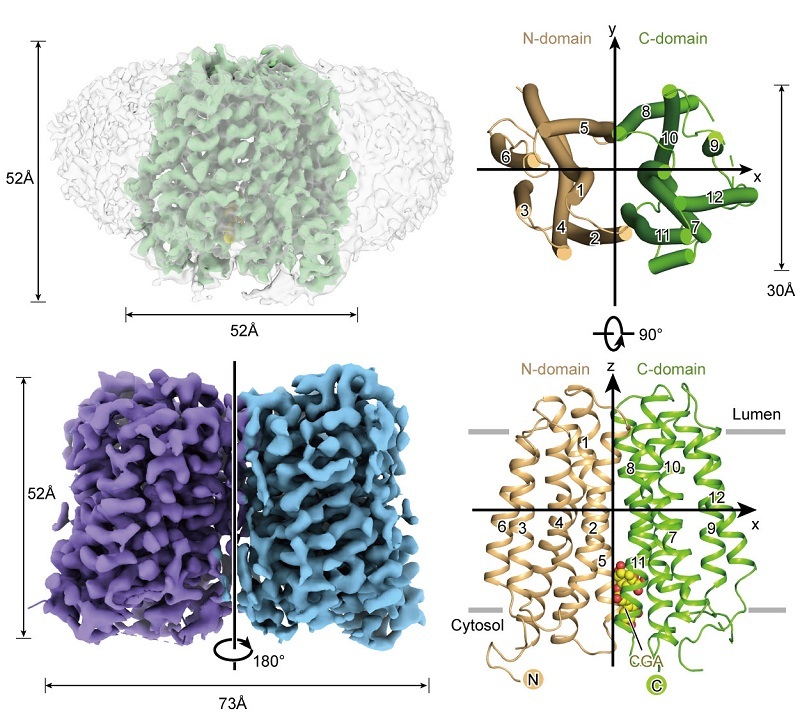
Figure 1. Overall Structure of G6PT1
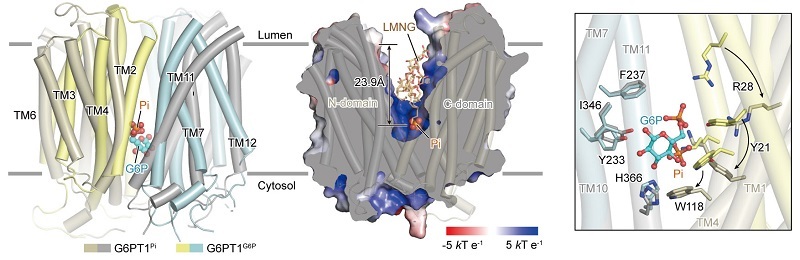
Figure 2. Substrate Recognition and Transport Mechanism of G6PT1
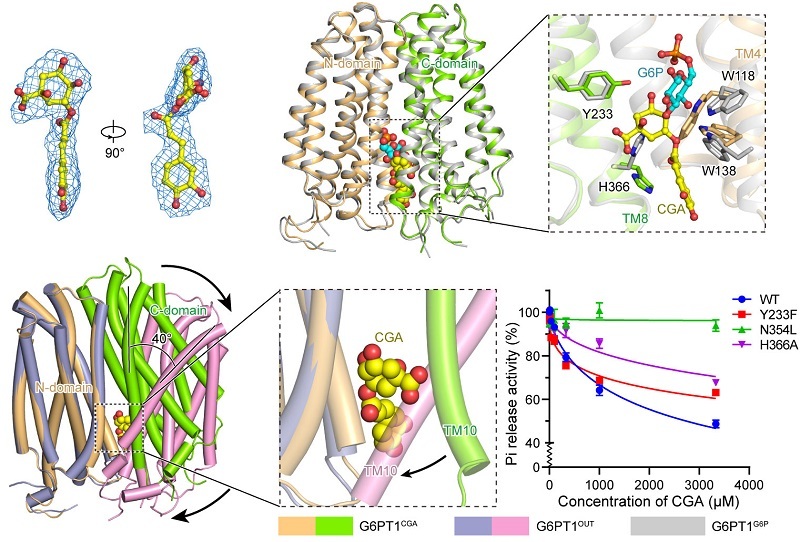
Figure 3. Molecular Mechanism of G6PT1 Inhibition by CGA
(Image by ZHAO Yan's group)
Article link: https://www.science.org/doi/10.1126/sciadv.adz8234
Contact: ZHAO Yan
Institute of Biophysics, Chinese Academy of Sciences
Beijing 100101, China
E-mail: zhaoy@ibp.ac.cn
(Reported by Prof. ZHAO Yan's group)