

Vertical Membrane Shearing Unveiled as a Novel Antiviral Mechanism in Bacterial CBASS Immunity
The cGAS-cGAMP-STING pathway is a key DNA sensing pathway in animal innate immunity, which transmits upstream DNA signals to the downstream membrane protein STING via the second messenger 2'3'-cGAMP and plays important roles in infection, inflammation, and tumor immunity. The unique 2'-5' and 3'-5' mixed phosphodiester bond structure of 2'3'-cGAMP confers stronger STING activation capability and profoundly influences the design of related agonists.
On April 17, 2026, a collaborative study led by Prof. GAO Pu at the Institute of Biophysics of the Chinese Academy of Sciences, and Prof. GAO Ang at Beijing Institute of Technology was published in Cell, systematically elucidating the production of 2'3'-cGAMP in prokaryotes, its activation of downstream transmembrane effector proteins, and how this signaling ultimately leads to a novel form of membrane damage and cell death.
The study found that a class of bacterial CD-NTases is activated in the presence of DNA and Mn2+, specifically synthesizing 2'3'-cGAMP. Further mass spectrometry and nuclear magnetic resonance analyses revealed that the chemical linkage of this product is identical to the 2'3'-cGAMP produced by mammalian cGAS, pointing to an evolutionarily ancient root of this signaling logic.
The researchers further focused on a representative and widespread class of transmembrane effectors-3TM-SAVED. The results showed that these proteins exist as monomers in the resting state; upon specific recognition of 2'3'-cGAMP, they first form a transient dimeric intermediate and then assemble into higher-order filaments. Structural and functional analyses demonstrated that 2'3'-cGAMP directly participates in and stabilizes the protein assembly interfaces, driving the protein stepwise from a resting state into an activated state.
An unexpected yet important discovery in this study was the revelation of a completely new mode of membrane disruption. The 2'3'-cGAMP-induced higher-order filaments reorganize their own transmembrane helices and amphipathic hairpin motifs so that they act together on the lipid bilayer in a mutually offset manner, pulling the membrane into vertical misalignment. The authors term this phenomenon "vertical membrane shearing."
Further studies revealed that this shearing is not merely a membrane deformation; it creates a linear array of small pores along the disturbed membrane interface. These pores are sufficiently large to allow the passage of water, ions, and small molecules, thereby significantly increasing membrane permeability, ultimately triggering cell death and blocking viral propagation.
This study expands our understanding of the evolutionary diversity of innate immunity across three levels-signaling molecules, receptor mechanisms, and effector execution-broadening our knowledge of the evolutionary diversity of innate immune signaling systems and the mechanisms by which membrane proteins disrupt biological membranes.
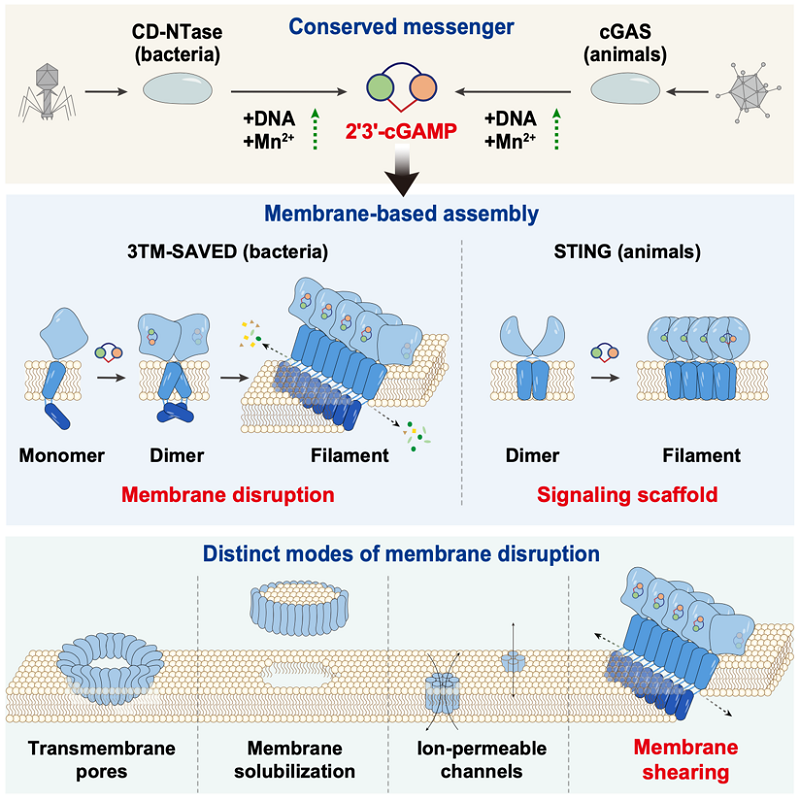
Figure: 2'3'-cGAMP-mediated diverse immune mechanisms
(Image by GAO Pu's group)
Article link: https://www.cell.com/cell/fulltext/S0092-8674(26)00344-2
Contact: GAO Pu
Institute of Biophysics, Chinese Academy of Sciences
Beijing 100101, China
E-mail: gaopu@ibp.ac.cn
(Reported by Prof. GAO Pu's group)