

Scientists Unveil Large-Scale in situ Cryo-ET Resource for Exploring Mouse Sperm Ultrastructure
Deciphering the near-native three-dimensional architecture of sperm is crucial for understanding their development, motility, fertilization, and the structural basis of male infertility. However, existing public cryo-electron tomography (cryo-ET) data resources remain inadequate, lacking datasets that combine scale, quality, and regional coverage, which severely limits data reuse, cross-regional comparisons, and the development of automated analysis methods.
On November 1, 2026, a team led by Prof. SUN Fei from the Institute of Biophysics of the Chinese Academy of Sciences, officially released the Mouse Sperm Ultrastructure Resource (MSUR) in Data Express in Life Digitalization.
Comprising 1,413 reconstructed tomograms and associated data from wild-type C57BL/6J mouse sperm, MSUR covers all major regions of the sperm, including the head, neck and midpiece, principal piece, and end piece. It serves as a large-scale data resource dedicated to in situ ultrastructural research and computational analysis of sperm.
The study details the complete workflow of sperm sample preparation, cryo-focused ion beam (cryo-FIB) milling, tilt-series acquisition, and tomogram reconstruction. It provides raw tilt-series data, acquisition metadata, alignment parameters, reconstructed tomograms, and quality control records.
The researchers also compiled and organized the acquisition conditions and basic information for each dataset, specifying the instruments used, tilt strategies, and key processing parameters. This enables researchers to understand the data provenance, select specific regions of interest, and reprocess or reanalyze the data according to their own research goals.
Additionally, the dataset is accompanied by supporting documentation and detailed step-by-step processing protocols.
By sharing data across multiple stages, from raw data to reconstructed results, MSUR provides a solid foundation for verifying research findings and continuous data reuse.
MSUR supports a wide range of downstream applications, including in situ observation and comparison of sperm ultrastructure, sub-tomogram averaging (STA), and the development of automated methods such as particle picking and image segmentation. Furthermore, the wild-type data can serve as a valuable reference for studying structural changes associated with mutations or disease.
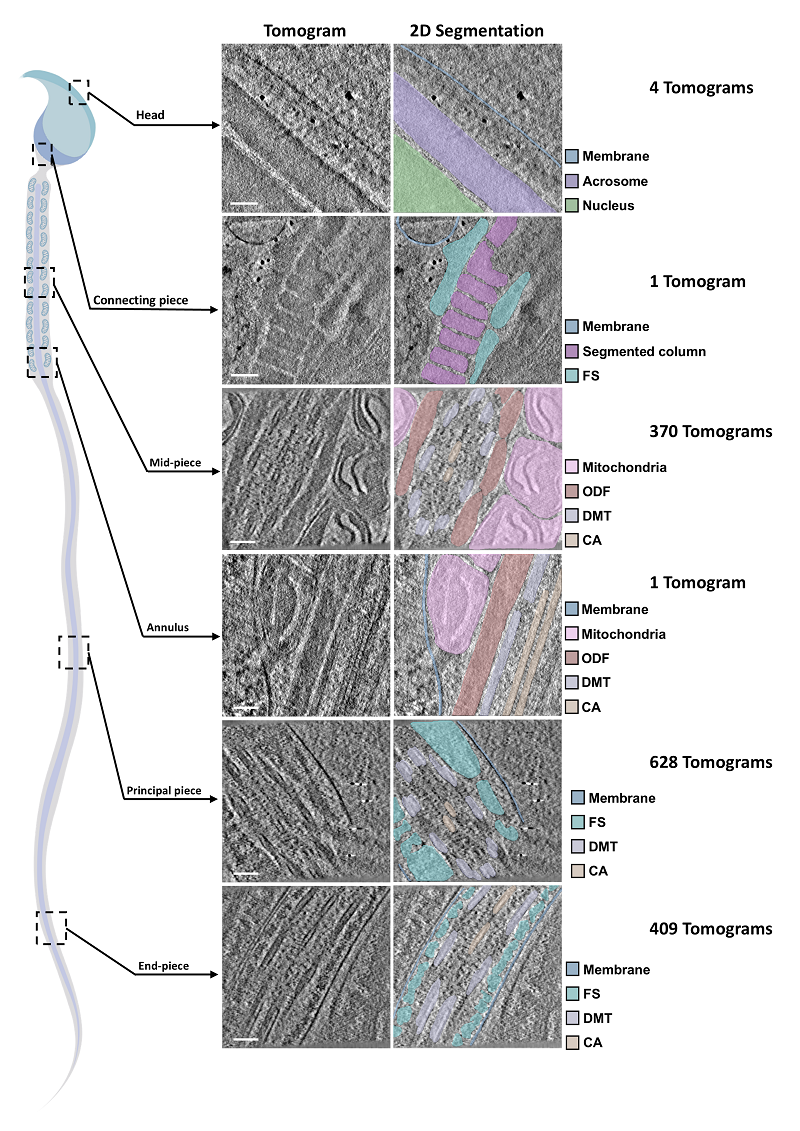
Figure 1: Cryo-ET reconstructions of distinct regions of mouse sperm in the MSUR dataset
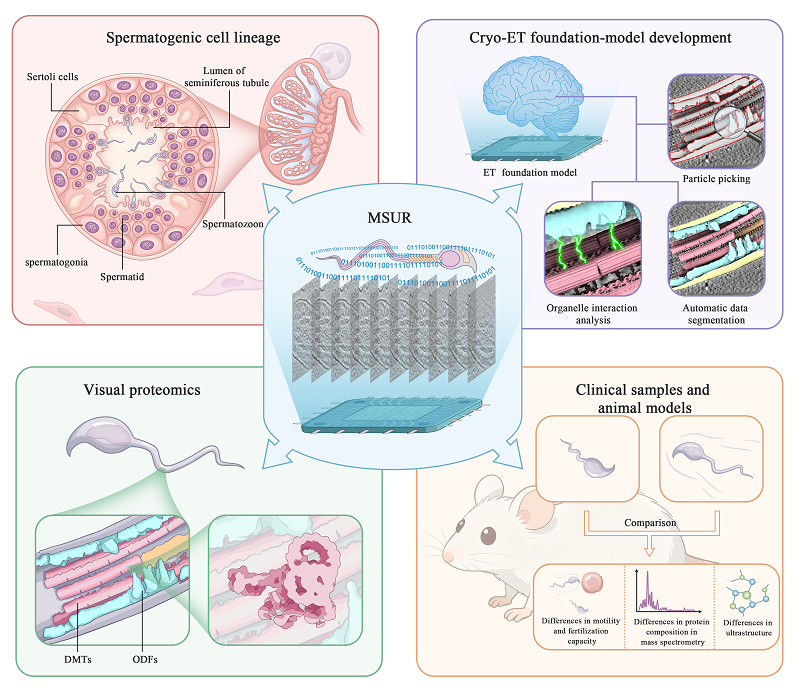
Figure 2: Illustrative applications of the MSUR dataset
(Image by SUN Fei's group)
Article link: https://doi.org/10.3724/DeLD-20260014
Dataset Link:
CSTR: https://cstr.cn/31253.11.sciencedb.00zls
DOI: https://doi.org/10.57760/sciencedb.00zls
Contact: SUN Fei
Institute of Biophysics, Chinese Academy of Sciences
Beijing 100101, China
E-mail: feisun@ibp.ac.cn
(Reported by Prof. SUN Fei's group)